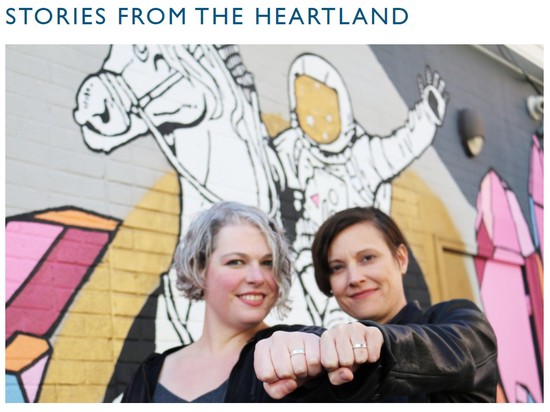
I’m an archivist, a historian, and an Assistant Professor at Western University’s Faculty of Information & Media Studies. My work focuses on names and naming, the multiple histories of information, and equitable cataloging in cultural heritage institutions.
You have reached my resume website. Or perhaps you were interested in…
I am a disabled, white, queer & nonbinary settler hailing from unceeded N’dakina in Aln8ba8dwaw8gan. I am now an uninvited guest on the traditional lands of the ᐊᓂᔑᓈᐯᐗᑭ (Anishinaabek), Haudenosaunee, Eelünaapéewi Lūnaapéewak (Lūnaapéewak) & Chonnonton nations. I live on lands between the London Township, Treaty 6 & McKee Treaty 2, 1790, and I work on lands connected with the Sombra Treaties of 1796 & the Dish with One Spoon Covenant Wampum.
As a Vanier Scholar at the University of British Columbia’s iSchool, I focused on the (multiple) histories of information and on the practice of equitable cataloguing in cultural heritage institutions, or GLAMS (aka Galleries, Libraries, Archives, Museums, and Special Collections). I also serve as an Organizer on the Homosaurus Collective Collective; the Homosaurus is a widely-used linked data vocabulary for queer terminology developed by and for the queer communities for use in GLAMS. I support equitable knowledge work through CritCat.org, a database of literature on the topic, prepared as part of my doctoral program, along with more than thirty peer-reviewed publications during the same time period.
I received my MLIS and training as a knowledge worker and an archivist from Indiana University Bloomington and I continue my work as a community archivist on behalf of polyamorous and asexual communities. I am the the Archivist-Historian for the Haslam Collection on Polyamory part of the Consensual Nonmonogamy Committee of theAmerican Psychological Association and also to the ArQuives, the largest independent LGBTQ2+ Archives in the world and currently Canada’s only national LGBTQ2+ archives.
I also trained as a historian at Drew University, where I focused on the history of the book and the history of sexuality. My work in these areas has continued, and they are the central focus of my first book (Annals of Pornographie: How Porn Became Bad) and my third, tentatively titled: The Kinseys and the Myth of the Sexual Revolution. My second book was a co-edited collection called Ethics in Linked Data, published while I was a doctoral student. I also direct HistSex.org, a free and open access resource for the history of sexuality.
I was a cofounder and the coordinator for both the Trans Metadata Collective and the Queer Metadata Collective, which were organizations of ~100 (TMDC) and ~1000 (QMDC) knowledge workers with a concerted interest in improving the description and classification of queer, trans and gender diverse people in GLAMS and other sociotechnical systems. The TMDC received the Nancy DeLaurier Award from the Visual Resources Association in recognition of our achievement. Finally, my work on the Name Change Policy Working Group to allow married, Indigenous, queer, trans, and gender diverse authors to change their publication names has affected the policies of tens of thousands of academic journals.
Course description: Serves as an introduction to issues in organization of information and documents including: analysis of intellectual and physical characteristics of documents; principles and practice in surrogate creation, including standards and selection of metadata elements; theory of classification, including semantic relationships and facet analysis; creation of controlled vocabularies; and display and arrangement. Provides the student with the analytical tools to assess how information is organized in an information system.
Archivist-Historian; Executive Board
American Psychological Association, Div44, CNM Taskforce
May 2019 –
Present
Serving on the executive board, working closely with co-leads Dr. Heath Schechinger and Dr. Amy Moors to document and preserve the work of 100+ professionals at 50 universities worldwide into the Kenneth R. Haslam Collection on Polyamory at the Kinsey Institute. Required significant education on archival practices and federal regulations (FERPA, HIPAA ,and others). Also manage the taskforces’ KO and archiving workflows.
Researcher: Classifying, Documenting, and Preserving Human Sexuality at the Kinsey Institute
Dr. Marika Cifor, Dr. Robert D. Montoya
Jan 2019 –
May 2020
Prepared literature and archival collection reviews. The research is a multi-disciplinary project involving archival studies, knowledge organization, and history, the third of which is my focus and contribution. My contributions to the research have grown out of my own research into the history of the classification and organization of sexualities in Western contexts between Hirschfield and Kinsey.
‘The Price of Admission’ GLAMs and Internship Diversity
Dr. Marika Cifor
Jan 2019 –
May 2020
Undertook a large literature review of all the available information on GLAM internships and diversity, and then prepared data on nearly 400 institutions of higher education in the United States, Canada, and elsewhere.
Transgender, non-binary, and/or gender diverse—here shortened to “trans”—authors seeking to receive full credit for their work face unique challenges and risks. Trans people do not receive the same legal protections against discrimination as cisgender people worldwide; they are subject to significant risk of discrimination, harassment, and violence; and many experience a particular form of personal trauma connected to their pre-transition identities that makes them especially vulnerable within the academic community. One significant source of epistemic labor, risk, and trauma for transgender authors, is the continued circulation of their previous name. In this article, we present five high level principles for trans-inclusive name changes in academic publishing and consider the implications of such a paradigm shift within the scholarly world.
CritCat is short for “critical cataloging,” a movement of cultural heritage workers who work to bring social justice, radical empathy, and outreach work into their everyday practice. This site aims to serve as a resource for catalogers and the cataloging-curious.
TMDC is a group of dozens of information professionals with a concerted interest in improving the description and classification of trans and gender diverse people. The Collective’s primary goal was the development of a set of best practices, released June 2022.
CritCat is short for “critical cataloging,” a movement of cultural heritage workers who work to bring social justice, radical empathy, and outreach work into their everyday practice. This site aims to serve as a resource for catalogers and the cataloging-curious.
The Marriage Equality Collection, held at the Kinsey Institute Library and Special Collection, includes audio and video files, photographs, historical documents and ephemera representing experiences of same-sex couples.
This dissertation centers on understanding and fixing the persistent and
wicked problem of marginalization in systems. I do this by examining the “power
to name” utilized by cultural heritage institutions (like Galleries, Libraries,
Archives, Museums & Special Collections; GLAMS) and informational infrastructures
(like databases, psychological schema, or social media platforms). As systems are
defined by boundaries, the act of naming or labelling people, places, and things
in these Knowledge Organization Systems (KOSes) produces marginalizations and exclusions.
I undertake a comprehensive analysis to understand how a century of literature and
efforts aimed at addressing these issues have partially, piecemeal, or totally failed.
In response, I develop a three-pronged project combining (1) historical analysis,
(2) qualitative, and (3) participatory action research across three temporal dimensions:
Historical: To document how the seemingly-neutral organization of knowledge can
shape the most private and personal aspects of identity, I researched (RQ1) how
the organization of knowledge in sexology shaped queer individuals and communities;
and (RQ1a), acknowledging their oversized impacts, examined the roles Alfred C.
Kinsey and the Kinsey Institute played, in order to demonstrate how Western society
came to “see like a system.” - Contemporary: To document present-day harms of this
system and best practices for addressing or ameliorating them, I undertook the largest
qualitative research study of marginalized knowledge workers in order to understand
how they see their role as users, maintainers, and developers of marginalizing KOSes
and what the similarities and differences were in their responses to systems? (RQ2a)
Future-Facing: Finally, to put these practices into action and to move forward
in an ethical, equitable, and just manner, I developed community-based participatory
interventions into those systems by the people most harmed by them, examining how
we might revise, repair, or redevelop them. (RQ2b) These interventions include the
(1) Name Change Policy Working Group, which pushed publishers to introduce of name
change policies across thousands of publications; the (2) Trans and (3) Queer Metadata
Collectives, which engaged hundreds of knowledge workers (≈100 TMDC; ≈1000 QMDC)
to improve marginalized metadata; and (4) establishment of the Homosaurus Collective,
a vocabulary developed by and for the queer community.
This document is the result of two years of work by a group of nearly one hundred knowledge organisers, cataloguers, librarians, archivists, scholars, and information professionals with a concerted interest in improving the metadata treatment of queer people, communities, and items in GLAMS (Galleries, Libraries, Archives, Museums, and Special Collections) and other informational institutions. Their work has been supported by over 800 peer reviewers; combined, these groups make up the Queer Metadata Collective (QMDC). The QMDC builds upon earlier work done by the Trans Metadata Collective (TMDC), a similarly-organised group of metadata workers and information professionals with a concerted interest in improving the metadata representation of trans and gender-diverse people. The work of the TMDC culminated in Metadata Best Practices for Trans and Gender Diverse Resources, focusing on the description, cataloguing, and classification of information resources as well as the creation of metadata about trans and gender-diverse people, including authors, communities, and other creators. Following the publication of the Best Practices, several TMDC members founded and developed the QMDC over the summer of 2022. This document focuses on metadata by and about queer people, communities, and resources. While there is significant overlap between queer metadata and trans and gender diverse metadata, QMDC’s recommendations should not be seen as excluding or superseding TMDC’s, as trans and gender diverse people, communities, and resources have specific needs. For best practices and recommendations about trans and gender-diverse resources, please consult the TMDC document. If the TMDC and QMDC recommendations conflict (we are not aware of any instances in which they do), prefer the TMDC document for trans and gender diverse resources and the QMDC for other types of queer resources.
Metadata is often created about marginalized communities by professionals unfamiliar with the issues and preferences of the communities involved and so work practices which appear to be neutral continue to enact harm. To counteract these problems, metadata best practices should be developed by representative communities. That is, those directly affected by exclusionary work practices. Example projects, which take up this challenge, include the Archives for Black Lives in Philadelphia, Protocols for Native American Archival Materials, the Chicano Studies Collection Thesaurus, and the Trans Metadata Collective (TMDC). Created in 2021, TMDC, the focus of this contribution, was created in 2021, with the goal of developing a series of best practices addressing the sizable gap in information resources for trans and gender diverse materials and the communities that data is derived from.
This essay is occupied with attempts to provide alternative bibliographic infrastructures for marginalized communities and discusses the possibilities of queer metadata. First, I provide a definitional and literature review focused on the principles and purposes of the field of knowledge organization. Next, I introduce the Homosaurus as an example of a queer alternative to standard cataloging and classification structures. I draw from discussions on imagined records and impossible archival imaginaries in the archival studies field in order to propose the concepts of “metadatic imaginaries” and “impossible metadatic imaginaries.” The essay closes with considerations about the implications for queer bibliography.
XML-TEI Encoding of Swinburne’s letters and essays. This project is funded by a National Endowment for the Humanities grant.
Open Access Graduate Assistant
Scholarly Communications, Indiana University Libraries
Aug 2018 –
Dec 2018
XXX
Worked on several major projects within the Scholarly Communications department and among other Indiana University school units. This includes projects such as the management and understanding of the institutional DSpace repository, blogging, preparing educational materials, administrating Open Journal Systems for Open Access Journals.
Contributed towards the promotion, event planning and development of the department.
Developed a social media strategy for the promotion of Scholarly Communications work including blogging, podcasts, and videos on Twitter and other platforms. Also helped in the management and distribution of departmental email accounts and email newsletters.
Adjunct Professor
New England College
Aug 2015 –
Aug 2018
Taught American History, Essay Writing, and Democracy to freshman, sophomores, and juniors.
Used class and internet participation, outside engagement in teaching 20-30 pupils.
Instructed on a variety of topics, including creative poetry, freshman composition, and literature classes.
Historical Researcher and Cataloger
Jul 2015 –
Aug 2016
Provided research and information for company that sought to disrupt the usual antique store model by selling directly to consumers.
Supervised a team of 20 photographers and listers.
International Researcher and Author
Self
Jan 2013 –
Jan 2018
Researched and wrote a book on the development of censorship and obscenity, which resulted in an interview on Conan O’Brien, and inspired a number of interviews, articles and more.
Spent nearly seven months abroad conducting international research on restricted material.
Helped in the establishment of AskHistorians as the largest academic public history forum with nearly 1MM subscribers, 20MM monthly pageviews, and 20-30,000 monthly podcast listeners and financial supporters.
Received recognition from the AHA and NCPH and collaborated with the Library of Congress and other institutions.